
In the digital era, archives play a role that extends far beyond merely preserving records of the past. They have become strategic assets that support a stable, transparent, and accountable future. In 2026, through the Bank Indonesia Archival Festival (FESARBI) for Ministries and Government Institutions, Bank Indonesia (BI) organized the “BI Mengajar Goes to Campus” program as one of the festival’s key initiatives. The program was designed to introduce university students to modern digital archive management practices.
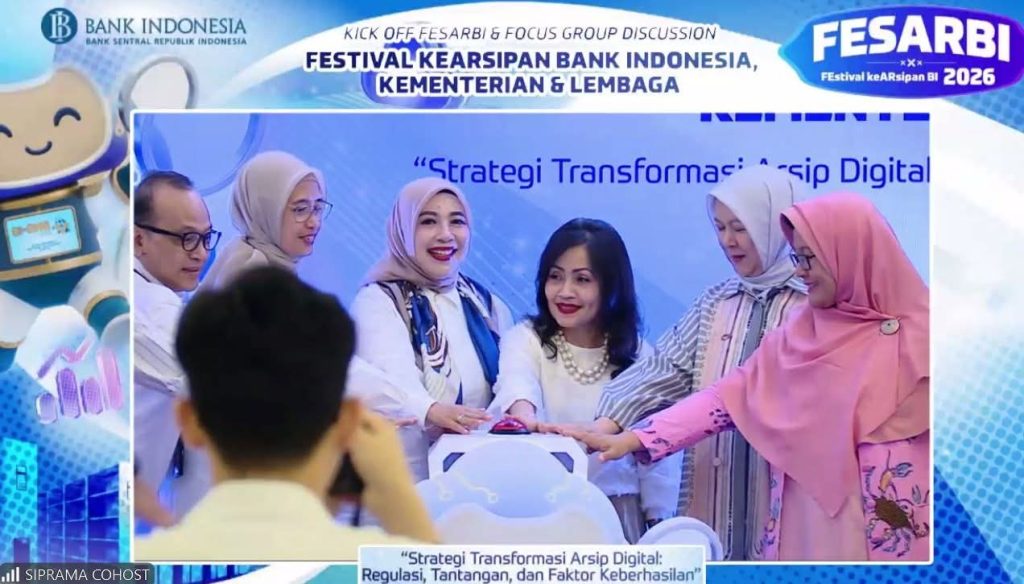
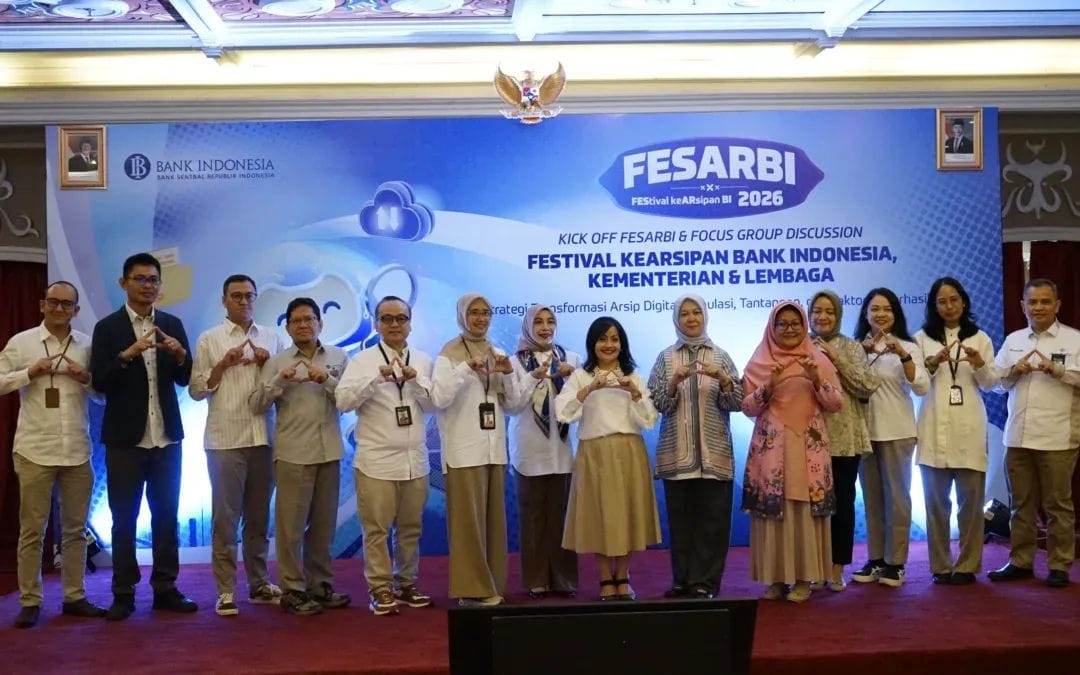
On Wednesday, April 8, 2026, Bank Indonesia officially launched the FESARBI Kick-Off Event alongside a Focus Group Discussion (FGD) entitled “Digital Archival Transformation Strategy: Regulations, Challenges, and Success Factors.” The discussion featured representatives from Diponegoro University (UNDIP), Universitas Indonesia (UI), Universitas Gadjah Mada (UGM), Universitas Padjadjaran (UNPAD), and Universitas Brawijaya (UB) as keynote speakers. The rapid pace of technological innovation and digital disruption has highlighted the urgent need for transforming archival management systems.
Effective archival management requires comprehensive policy formulation, capacity building, supervision, and continuous digital transformation. On this occasion, Dr. Endang Fatmawati, S.S., S.Sos., M.Si., M.A., a lecturer from the Information and Public Relations Study Program, School of Vocational Studies, Diponegoro University, participated as one of the invited speakers in the Focus Group Discussion. The discussion concluded with a number of strategic recommendations aimed at accelerating digital archival transformation while strengthening opportunities for inter-institutional collaboration.
Bank Indonesia’s vision is to become a leading digital central bank with strong governance that makes a tangible contribution to the national economy and ranks among the best central banks in emerging market economies in support of an Advanced Indonesia (Indonesia Maju). This vision served as one of the key driving forces behind the organization of the 2026 Bank Indonesia Archival Festival (FESARBI). The event was also motivated by the need to strengthen the regulations governing Bank Indonesia Document Management (MDBI) and by the strategic role of Bank Indonesia’s Department of Services, General Assets, and Facilities (DLAF) in implementing institutional transformation and strategic programs. In addition to reinforcing Bank Indonesia’s institutional leadership, FESARBI focuses on strengthening three key pillars: competence, champions, and collaboration.
At Bank Indonesia, document creation, management, and archival processes are integrated into the institution’s business processes, ensuring seamless end-to-end records management. To date, Bank Indonesia has implemented four internationally recognized ISO standards in archival management. First, ISO 9001 Quality Management System, adopted in 2003, recognizes the standardization of the institution’s document management framework and policies. Second, ISO 30301 Management Systems for Records, implemented since 2015, acknowledges the standardized implementation of records management practices. Third, ISO 15489 Records Management, also adopted in 2015, recognizes the quality standardization of Bank Indonesia’s archival services for its stakeholders. Fourth, ISO 41001:2018 Facility Management certifies the standardized management of the Arsek Building as the central repository for inactive records.
Managing archives is not merely about storing documents; it is about ensuring that information remains authentic, secure, easily retrievable, and valuable for future use. During the Focus Group Discussion (FGD), Dr. Endang Fatmawati emphasized that digital archival transformation begins with the conversion of physical records into electronic formats. This process requires careful attention to integrated management, efficient access, and long-term digital preservation. As mandated by Law of the Republic of Indonesia No. 43 of 2009 on Archives, records created by public institutions must support organizational accountability, preserve historical evidence, and serve as a basis for public accountability. She further explained, “An integrated digital archival information network and archival service system will strengthen the National Archival Information System (SIKN), the National Archival Information Network System (SJIKN), and the Integrated Dynamic Archival Information System (SRIKANDI). Moreover, Bank Indonesia has already implemented the BI Records Management System (BI-RMS) as its archival management tool.”
The concepts, research findings, and best practices presented during the FGD stimulated knowledge sharing and served as valuable discussion materials for participants. The forum concluded successfully, providing opportunities for participants to exchange ideas on digital archival transformation, deepen their understanding of the feasibility of implementing digital archival regulations, and strengthen coordination and inter-institutional collaboration in developing a more effective digital archival governance ecosystem.
Furthermore, Dr. Endang explained that the success of digital archival transformation depends on several critical factors: compliance with applicable regulations, the availability of competent human resources, the development of a shared mindset supported by strong leadership and organizational commitment, and the provision of adequate technological infrastructure. Digital records management must promote organizational accountability while supporting informed decision-making. The strategies proposed during the FGD are intended to ensure that records remain authentic, reliable, complete, accessible, and usable over time. Therefore, future archival management should consistently adhere to national and international archival principles, standards, and best practices.
Bank Indonesia is committed to becoming a leading digital central bank with strong governance, making tangible contributions to the national economy, and achieving excellence among emerging market economies to accelerate Indonesia’s development. To support this vision, the transformation of archival management into a modern, efficient, and digitally driven system has become a strategic necessity, serving as the foundation for a reliable and integrated records management framework.
As part of its efforts to strengthen institutional leadership in archival management, Bank Indonesia organized the 2026 Bank Indonesia Archival Festival for Ministries and Government Institutions (FESARBI). The event was held at Pos Bloc Jakarta on May 22–23, 2026, featuring a wide range of activities, including academic discussions, workshops on digital archival practices, exhibitions of archival management innovations, and inter-institutional knowledge-sharing sessions. FESARBI served as an inspiring platform to reinforce the commitment to modern, transparent, and globally competitive archival governance.
The School of Vocational Studies, Diponegoro University, once again participated in FESARBI 2026 through a delegation that contributed to both the academic discussion forum and the sharing session representing the Information and Public Relations Study Program. The University’s representative and invited speaker was Dr. Endang Fatmawati, S.S., S.Sos., M.Si., M.A., an academic specializing in records management, digital archiving, and cultural heritage preservation. Dr. Endang’s participation strengthened the Study Program’s role in disseminating knowledge and best practices in information management, public relations, and digital archiving. She emphasized that in today’s dynamic digital era, archives are no longer merely records of the past but have become strategic resources that drive innovation, policymaking, and national development.
On the first day of the festival, Dr. Endang delivered a presentation entitled “Competency Standards for Archival Management Personnel,” highlighting both the urgency of and practical approaches to modernizing institutional archival systems. The presentation began by outlining the diverse challenges faced by archival professionals, encompassing technical, managerial, and specialized aspects of archival work. She emphasized that professional competencies are essential to ensure accountability, professionalism, and compliance with archival regulations and policies.
Dr. Endang further stressed the importance of strengthening the capacity of archival professionals by optimizing the role of archivists in personal archival management and public archival awareness, expanding the use of digital archival applications, fostering broader professional networks and collaborations, and enhancing understanding of archivists’ competency standards.
In addition, she discussed several challenges confronting archival professionals in the digital era, including data fragmentation, limited interoperability, and the risk of losing the authenticity and integrity of digital records. To address these challenges, she proposed a strategic framework comprising risk-based records retention policies, metadata standardization to improve interoperability, phased migration to managed digital repositories, and the implementation of long-term digital preservation systems.
“In this context, the adoption of innovative technologies must always be grounded in the principles of integrity, accountability, and sustainability,” Dr. Endang concluded.
On the second day of the event at Pos Bloc Jakarta, Dr. Endang represented the Head of the Information and Public Relations Study Program, School of Vocational Studies, Diponegoro University, Arifa Rachma Febriyani, S.I.Kom., M.I.Kom., in delivering a presentation introducing the Study Program. She explained that students of the Information and Public Relations Study Program complete 144 credit units and graduate with the degree of Bachelor of Applied Information Science (S.Tr.S.I.). The program prepares graduates for careers as information and records managers, digital business entrepreneurs, and public relations coordinators.
The Study Program aspires to become a center of excellence in applied education and research in the fields of information and public relations, producing graduates with advanced technical and analytical competencies. Its distinctive focus lies in information management and information services within the field of public relations. During her presentation, Dr. Endang also highlighted the program’s unique strengths, including its Teaching Factory facilities—VocaMedia, Voca TV, and Voca Radio. In addition, she introduced the program’s specialized laboratories, including photography, language and digital information services, audiovisual production, an e-learning studio, podcasting and sound engineering, visual communication and media analysis, as well as information and public relations service laboratories.
The year 2026 marks a significant milestone for archival development in Indonesia. In response to the accelerating pace of digital transformation and increasing demands for public transparency, Bank Indonesia organized FESARBI as a platform to reaffirm its commitment to the digital transformation of archival management. More than a commemorative event, FESARBI represents a strategic movement that positions archives as valuable sources of information, institutional identity, and a foundation for policymaking in support of Golden Indonesia 2045. It promotes the vision that archives are not merely records of the past but also vital sources of knowledge for the future.
Well-preserved digital archives provide tangible evidence of the nation’s efforts to build a resilient and globally competitive economy. Bank Indonesia’s archival modernization initiatives include the digitization of both active and inactive records, integration with the National Archival Information System (SIKN), and the implementation of archival solutions supported by analytics and artificial intelligence technologies.
Through FESARBI 2026, Bank Indonesia successfully organized exhibitions, discussion forums, and collaborative initiatives involving various institutions to promote an integrated, secure, and future-ready digital archival ecosystem. It is hoped that FESARBI 2026 will serve as an important milestone in advancing Indonesia’s digital archival transformation and contribute meaningfully to the realization of a more advanced Indonesia.