
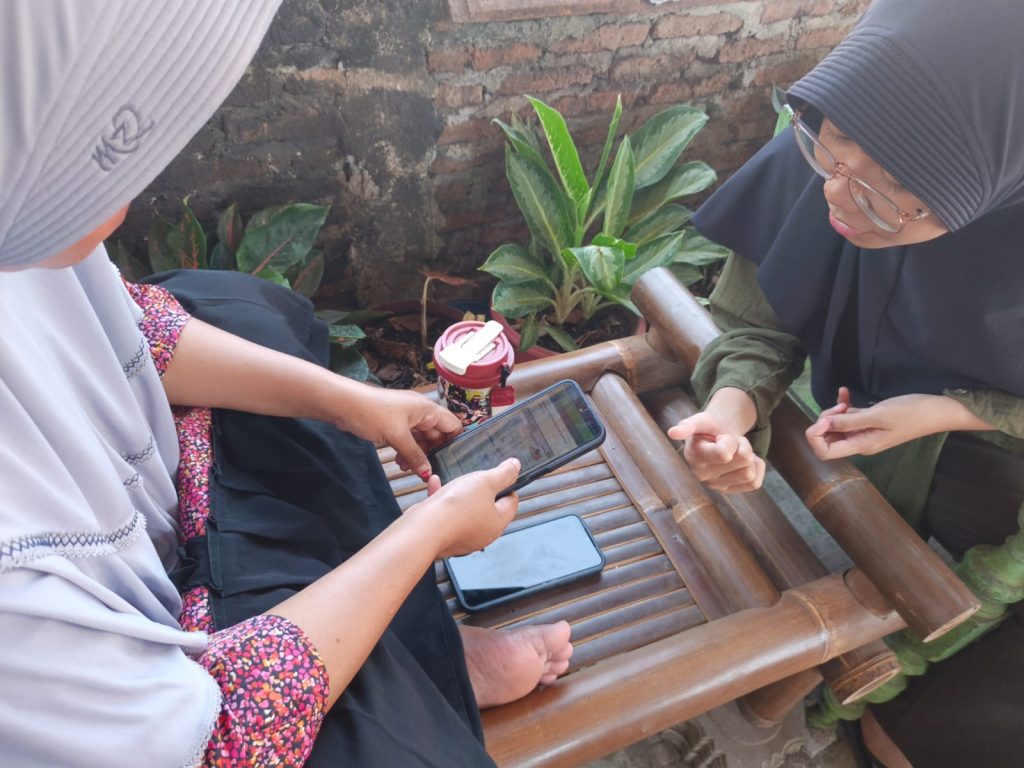
Caruban, Ringinarum – Students participating in the Community Service Program (KKN) of the Information and Public Relations Study Program are implementing a project to create the PESONA (Healthy Backyards for Medicine and Food) Digital Information Center using Google Sites. This initiative aims to support more productive use of home gardens while expanding access to information for residents of Caruban Village, Ringinarum Subdistrict, Kendal Regency.
The program, conducted during the KKN service period, involved KKN students, the Caruban Village Government, and the local community. The digital information center was created as an educational resource accessible at any time via computer or smartphone, enabling information on healthy home gardens to be no longer limited to face-to-face outreach. Therefore, the KKN students launched the PESONA Digital Information Center as a digital educational platform capable of reaching a wider audience.
Using the Google Sites platform, KKN students created a variety of educational content, including a profile of the PESONA program, the benefits of healthy home gardens, information on medicinal and food crops, a PESONA management guide, activity documentation, and other supporting materials. All information is presented in a simple, engaging, and easy-to-understand format so that people from all walks of life can access it.
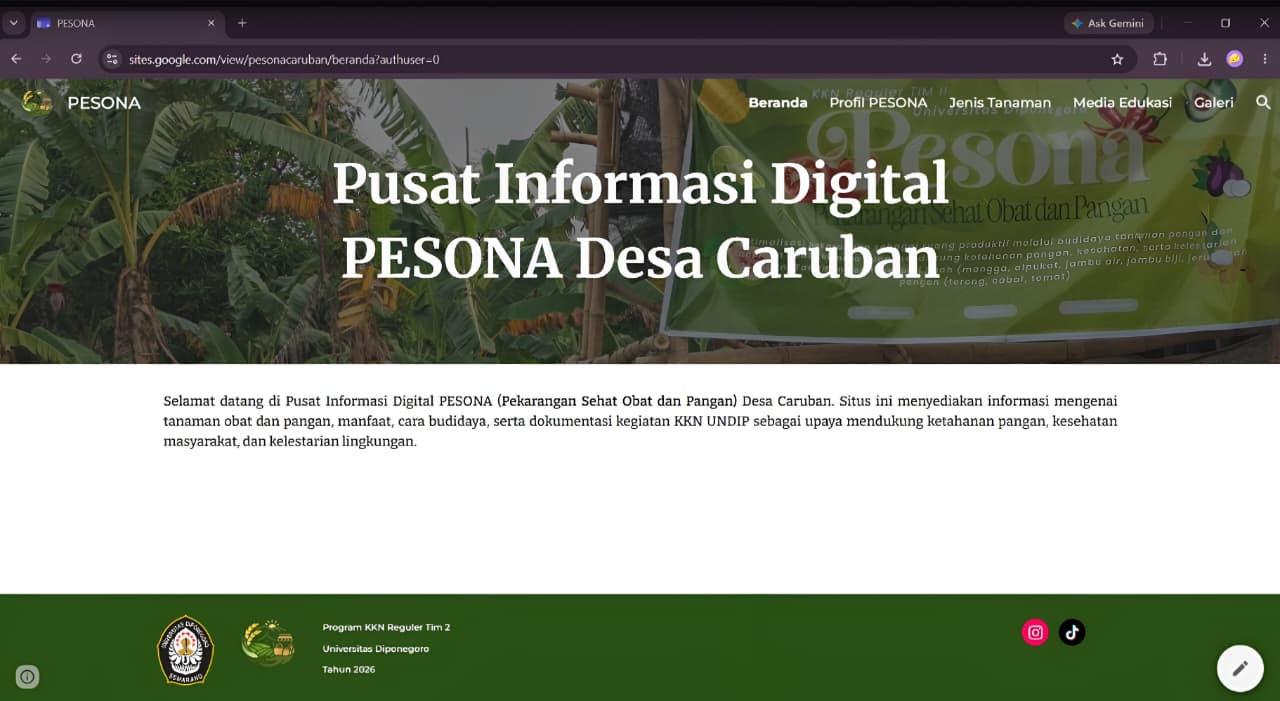
The website development process began with identifying the community’s information needs, collecting references and field documentation, designing the website, and finally launching it and introducing it to the community. Once the website was accessible, the KKN students also interviewed a resident of Caruban Village on August 6, 2026, to evaluate the community’s reaction to the digital information center.
One resident, Mrs. Iin, mentioned that the PESONA Digital Information Center website is easy to understand and navigate. She believes the information about the PESONA program is detailed enough to help the community learn to use healthy home gardens as sources of medicinal and food plants. “In my opinion, the website is easy to understand and use. The information about PESONA on the site is also quite comprehensive, making it easier for the public to find information on how to make the most of healthy home gardens,” said Ms. Iin, in Bahasa Indonesia.
This positive response demonstrates that the PESONA Digital Information Center serves as an effective educational tool while also supporting the improvement of the public’s digital literacy. It is hoped that this website will continue to be used as an easily accessible source of information, thereby further encouraging the public to optimize the use of their backyards for food production, health, and environmental conservation.
This program also supports the achievement of the Sustainable Development Goals (SDGs), specifically SDG 2 (Zero Hunger) by optimizing home gardens as a source of food for families, SDG 3 (Good Health and Well-being) by providing information on medicinal plants and healthy lifestyles, SDG 4 (Quality Education) by providing digital learning resources that are accessible at any time, SDG 11 (Sustainable Cities and Communities) by utilizing technology to support the empowerment of rural communities, and SDG 15 (Life on Land) through education on the conservation of plant diversity and the sustainable use of backyard land. Through this innovation, the KKN students hope that the PESONA Digital Information Center will continue to be used by the residents of Caruban Village as a way of learning, sharing information, and supporting the sustainability of empowerment programs based on backyard potential.